CAA Carbon Monoxide Safety Directive
BY
The CAA released a safety directive regarding active carbon monoxide detectors, which comes into force on 1st January 2025. This states that whenever passengers, who do not hold a recognised pilot qualification, are on board, an active Carbon Monoxide detector capable of alerting pilots via aural and/or visual warnings must be present in certain piston engine aircraft.
As CAA aviation medical examiners (AMEs), we recognise the importance of this human factors matter to flight safety, and wanted to help inform you.
Why has this been required?
Carbon monoxide (CO) poisoning has been recognised as a contributing factor in numerous general aviation (GA) incidents worldwide. In the United Kingdom, there have been three reported accidents since the year 2000, two of which resulted in fatalities, where CO poisoning was determined to be the probable cause. The risks associated with carbon monoxide exposure have been emphasised by the UK Air Accidents Investigation Branch (AAIB) in various accident reports, particularly in relation to the fatal incident involving N264DB in 2019.
The AAIB report concerning N264DB, highlighted fifteen additional incidents in the UK since the year 2000 in which carbon monoxide (CO) may have played a role. In eleven of these instances, a CO monitor alerted the flight crew to the presence of CO; in one particular case, the crew was reported to be nearly unconscious upon landing, while in four other cases, occupants experienced symptoms such as nausea and light-headedness. Furthermore, the AAIB noted seven other instances of exhaust fumes detected in the cockpit where a CO detector was absent. Moreover, the frequency of reported CO incidents has risen in recent years, likely attributed to improved reporting mechanisms. Between 2020 and 2023, the CAA received 34 Mandatory Occurrence Reports (MORs) related to CO; however, it is probable that under-reporting is an issue, particularly among those who lack a CO detector and thus remain unaware of potential CO hazards.
The safety directive was designed to prioritise the protection of passengers who are unlikely to have an appreciation of risks of carbon monoxide when travelling in piston engine aircraft.

Emilio Sala was a passenger on-board N264DB, who was probably exposed to Carbon Monoxide gas
What is Carbon Monoxide?
Carbon monoxide is an invisible and odourless gas that arises from the incomplete combustion of fuels. Piston engine aircraft are particularly known for generating elevated levels of CO, which are typically expelled from the aircraft through the exhaust system. Nevertheless, any cracks in the exhaust system or inadequate sealing may allow CO to infiltrate the cabin. Aircraft heating systems that heat cabin air using the hot exhaust metalwork, or that heat air by a small combustion heater, can also pose a risk for entry of CO into the cabin.
Once carbon monoxide enters the bloodstream, it binds with haemoglobin—the protein responsible for oxygen transport in red blood cells—forming carboxyhemoglobin (COHb). This compound diminishes the blood's capacity to deliver oxygen to essential organs. As COHb concentrations increase within the body, symptoms become more severe. Additionally, the risk of CO exposure escalates with altitude, thereby heightening the danger for individuals flying at higher elevations.
How might Carbon Monoxide Effect Me?
In mild poisoning, there may be no symptoms of it at all in some people, while others might get a slight headache, which can easily be misinterpreted as a less serious condition. Moderate poisoning can produce symptoms such as a bad headache, nausea, fatigue, dizziness, blurry vision, impaired judgment, drowsiness, breathing difficulty, or stomach pain. As severe poisoning occurs, then the headache usually becomes pounding with confusion, marked shortness of breath, followed by unconsciousness and death. At higher CO concentrations death can occur within a hour.

Symptoms from CO poisoning may be vague initially, but are a serious threat to safe piloting
What is an active carbon monoxide detector?
The covert characteristics of carbon monoxide render it challenging to detect without assistance. Active carbon monoxide detectors deliver audible and/or visual alerts when elevated levels of carbon monoxide are present, serving as an effective means of warning against CO hazards. These devices can be either portable, allowing them to be brought onto the aircraft, or permanently installed. Active carbon monoxide detectors can be classified into two main categories:
Aviation Standard - Active carbon monoxide detectors that comply with aviation standards (e.g., ETSO-2C48a) are suitable for permanent installation in aircraft, typically providing enhanced integration within the cockpit and additional features. It is increasingly common for these detectors to be integrated as standard components alongside other aviation equipment, such as ADS-B systems and headsets.
Commercial Off-the-Shelf - A diverse selection of competitively priced active carbon monoxide detectors is available for domestic use. While these devices are not specifically certified for aviation, a 12-month study conducted by the CAA on low-cost active carbon monoxide detectors indicates that they can perform adequately at typical recreational general aviation altitudes. Some of these detectors offer real-time CO level readings and data logging capabilities, enabling pilots to monitor low-level carbon monoxide and detect minor fluctuations over time, which may signal the onset of an issue. Devices that comply with relevant industry standards, such as EN 50291-2, are recommended.
Installing or carrying an active CO detector on board does not require any approval from the CAA, and devices may be permanently installed without any CAA involvement. Prior to each flight, the device should be secured, and a check made of its functionality e.g. alarm check.
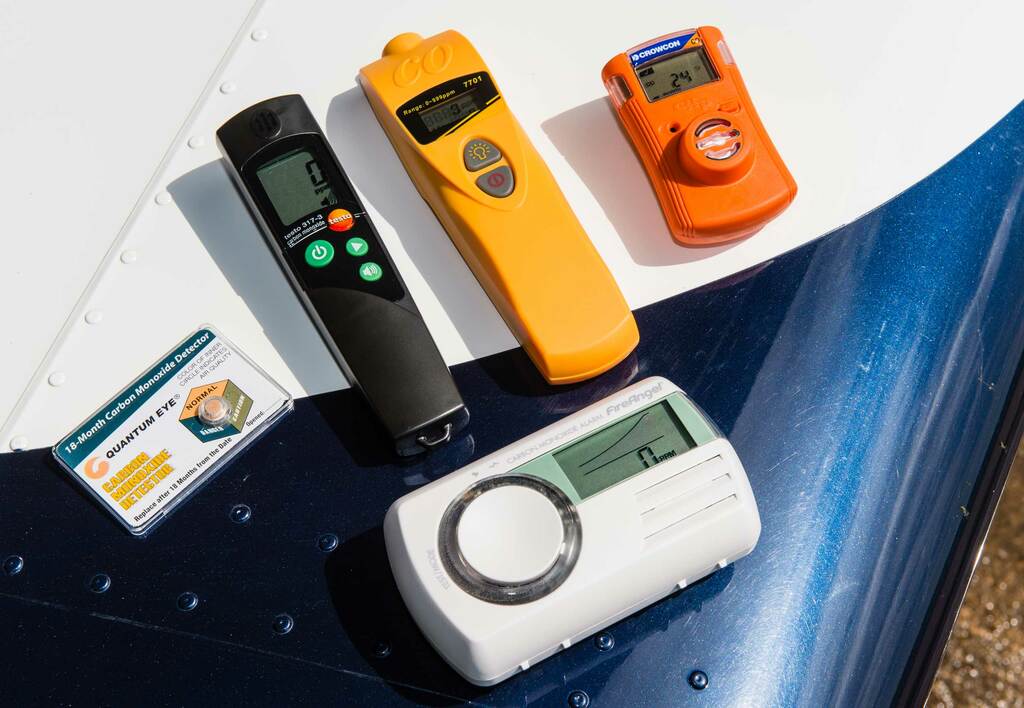
A selection of portable active carbon monoxide detectors
Which types of aircraft does the safety directive apply to?
The directive applies to all piston engine aircraft unless they are single seat, open cockpit, performing aerobatic manoeuvres, or the engine is located above or behind the cabin or mounted on the wing only. However, any aircraft whose cabin air is heated via an exhaust heat exchanger or combustion heater also falls with the scope of the directive, e.g. most GA piston twin aircraft where heat is supplied by a combustion heater.
So in summary, this directive will apply to most of the UK’s piston engine powered fleet when non-pilot passengers are on board. Hopefully the benefit will be few CO related incidents, and perhaps

Most piston aircraft that can carry a passenger are implicated in the directive